






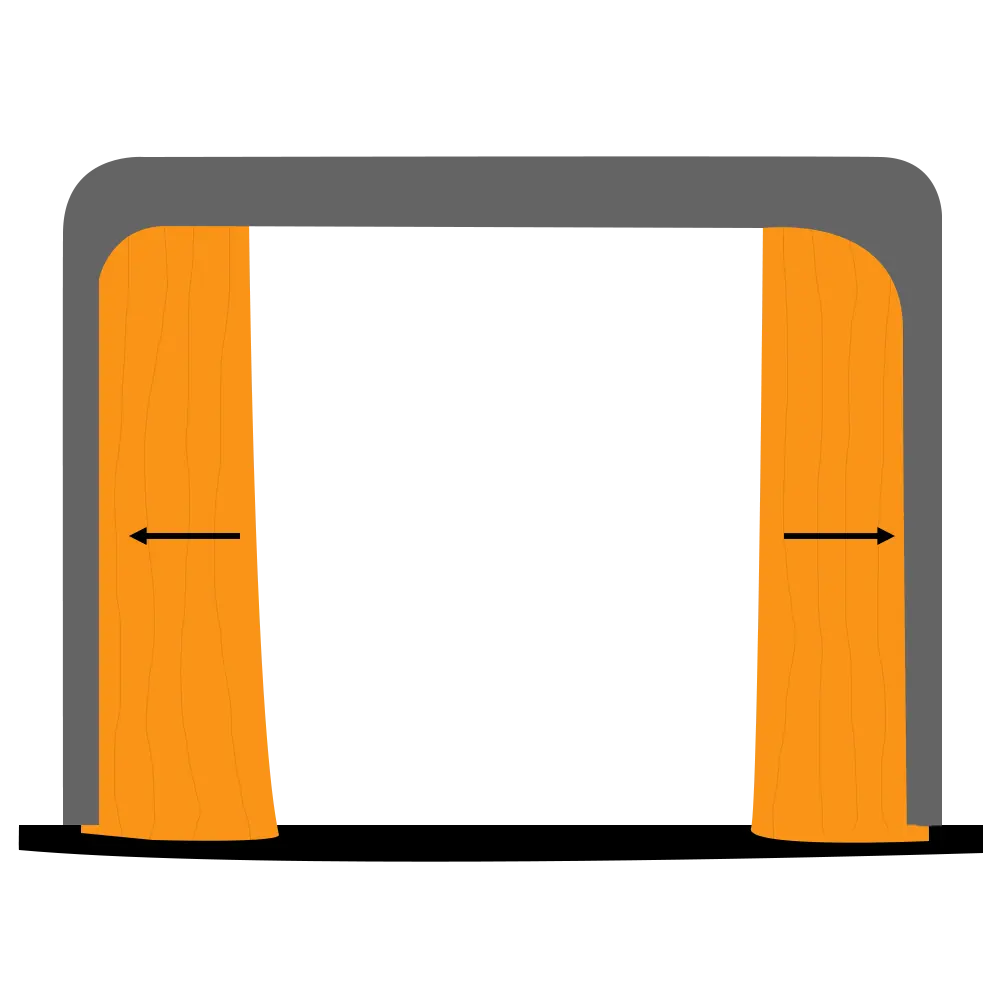
Panels split and run out to the wings. Low rigging, forgiving timing. Traveller.
Drapes · Opening styles
Updated 28 May 2026
Drapes
Opening styles
8 stage drape opening styles every venue should know.
Eight distinct opening styles are in regular use, each suited to specific rigging and track conditions. Here is how to match the style to your venue - not the other way around.
The drape rises straight into the fly tower. Needs grid height. Guillotine, Venetian.
Fabric gathers into pleats, swags or a fan as it rises. Tableau, Austrian, Roman.
Held, then dropped or cascaded to deck on cue. Kabuki, Tumbler.
Pick the opening style before you pick the fabric, or you end up with a traveller curtain on a production that needed a kabuki drop.
Traveller curtain
The workhorse horizontal split.
Two overlapping panels meet at centre stage and run outward to the wings on a corded or motorised track. The traveller is the default opening style in school theatres, multipurpose halls, and touring receivers because it is reliable, low-rigging, and forgiving on cue timing. It does not need a tall fly tower, only horizontal track length to the wings.
Practical note
Compatible with corded and motorised tracks. Choose motorised when the venue runs frequent turnovers or when crew capacity is limited.
See the TSA drapes range for traveller-compatible house curtains and masking sets.
Guillotine curtain
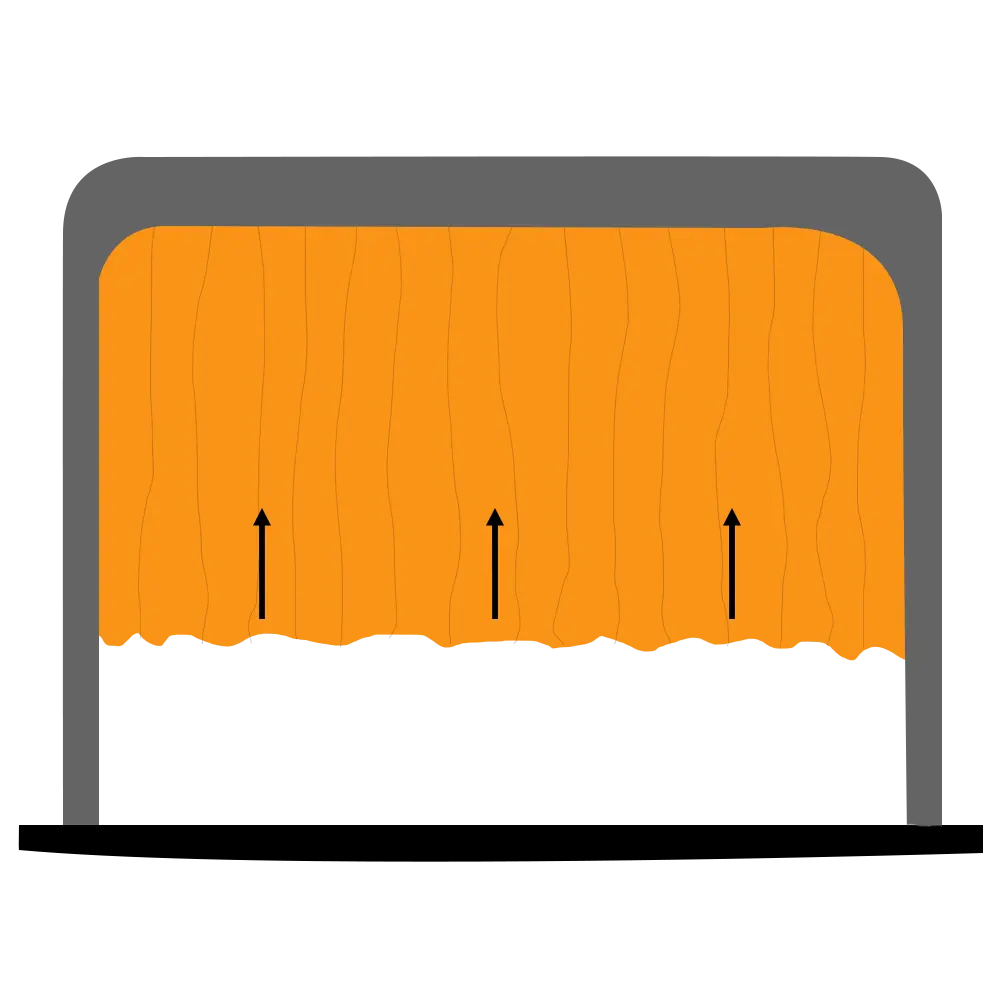
Straight vertical lift, minimal wing space.
A guillotine rises straight up into the fly tower on a flown line set, then drops back to deck on cue. It suits venues with the rigging height to take the drape fully out of sight and the line-set capacity to carry it. Touring musicals and corporate keynote stages favour it because it gives a clean, fast reveal without eating into the wings.
Practical note
Requires a fly tower with usable grid height of roughly twice the drape drop. Sits on TSA Rigging line sets and counterweight or motorised systems.
Pair with TSA Rigging line-set design when specifying a guillotine - see the TSA drapes range and ask about integrated rigging.
Tableau curtain (tabs)
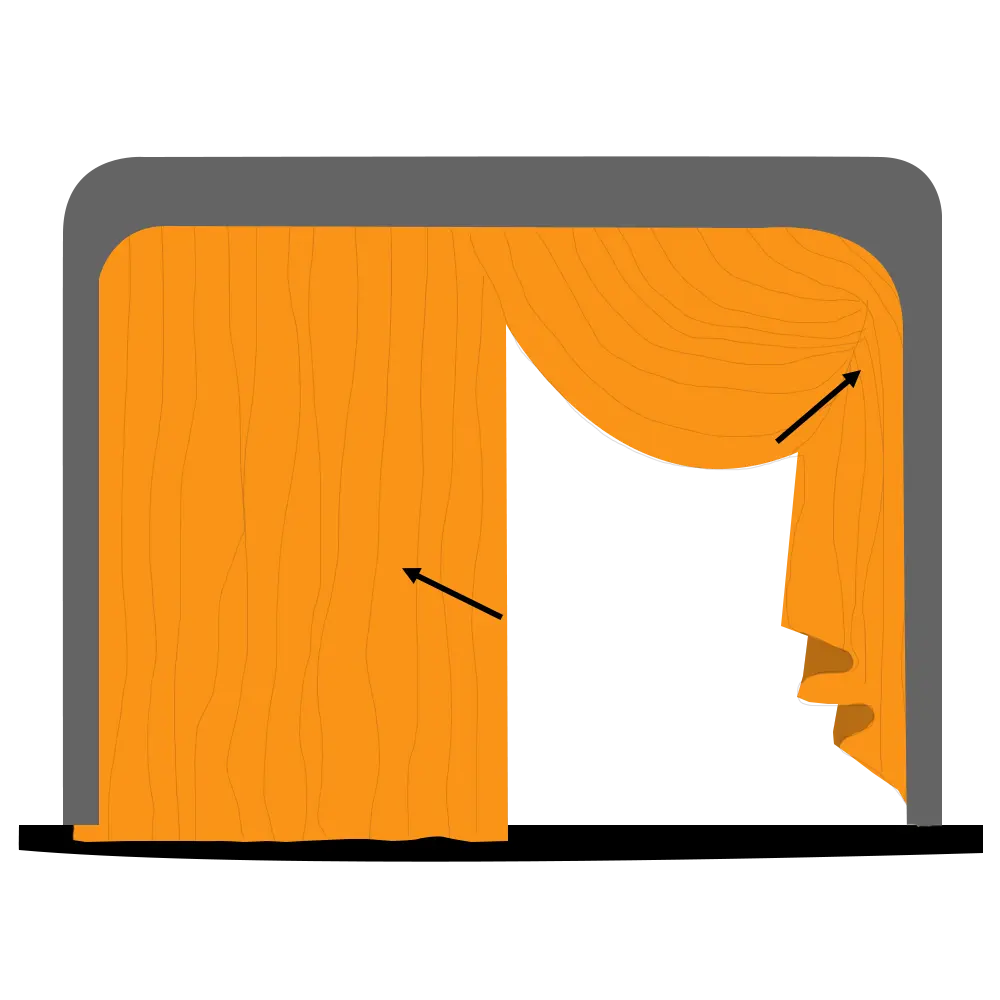
Diagonal fan rise from the top corners. Also called tabs.
Tableau curtains - often called tabs - gather diagonally from the two upper corners, opening in a sweeping fan shape that frames the proscenium. They read as classical and ceremonial, which is why ballet, opera, and gala-format productions still specify them. The drape lift lines run on the back face of the curtain rather than the top edge.
Practical note
Best paired with velvet or velour for the visual weight the style is built around. Confirm the lift-line geometry against your proscenium width before ordering.
Fabric choice matters here - see the velvet vs wool vs molton comparator for the fabric that suits tableau best.
Venetian curtain
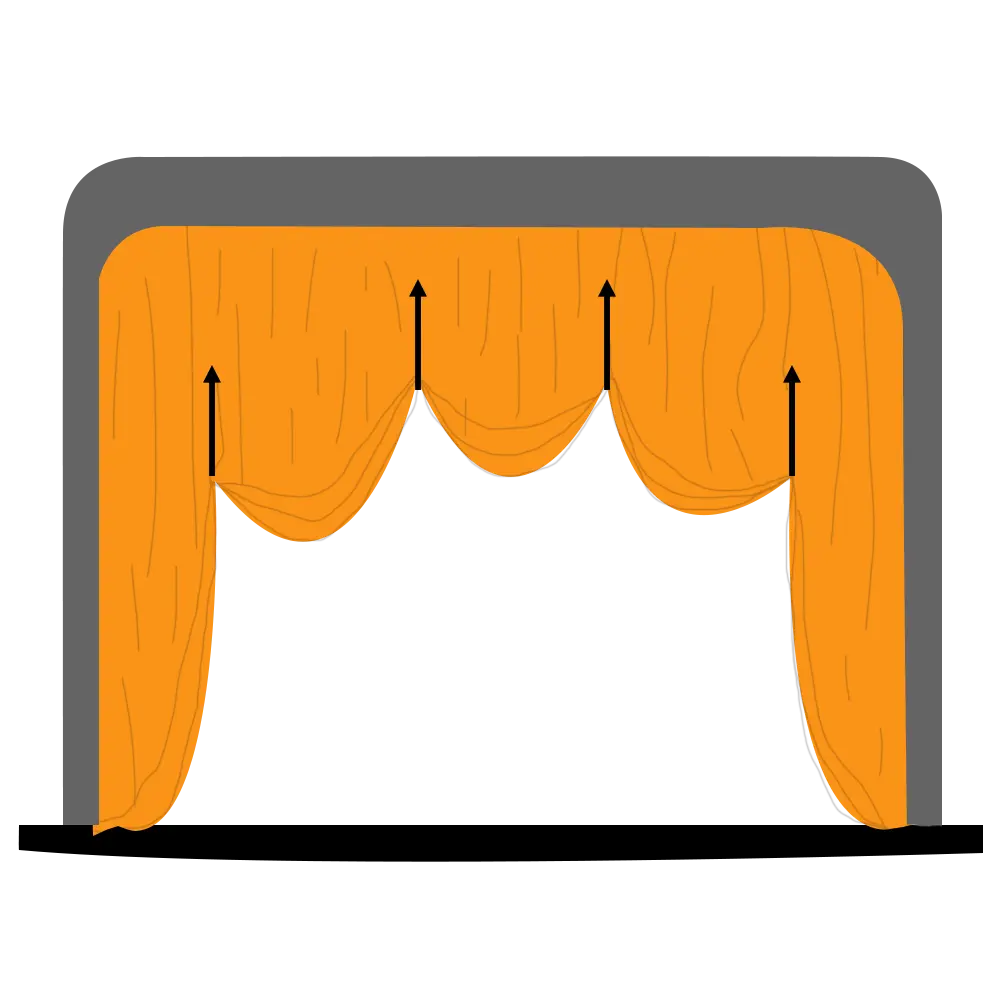
Independent vertical sections in a scalloped lift.
A Venetian splits the drape into independent vertical sections, each on its own lift line, so the curtain rises in scalloped bays across the proscenium. Concert halls and high-end gala spaces use it for the formal silhouette and the flexibility to reveal in stages. It needs multiple synchronised lift lines, which makes the rigging spec more involved than a single-line guillotine.
Practical note
Synchronisation is the engineering question. Specify motorised lift control if the venue plans cued sequencing across the bays.
See the TSA drapes range for Venetian-compatible house curtain builds.
Austrian festoon curtain
Vertical ascent into deep pleated swags.
An Austrian gathers vertically into rich horizontal pleats as it rises, holding its body of fabric in scalloped swags rather than retracting flat. Musical theatre, historic-period work, and high-drama production formats favour it for the volume of fabric on display. It carries more weight than a flat drape of the same drop because of the extra fullness.
Practical note
Always specified in heavy IFR velvet or velour. Confirm line-set or motorised lift capacity against the fabric weight at full fullness.
FR class matters at this weight - see fire ratings explained before specifying the fabric.
Roman curtain
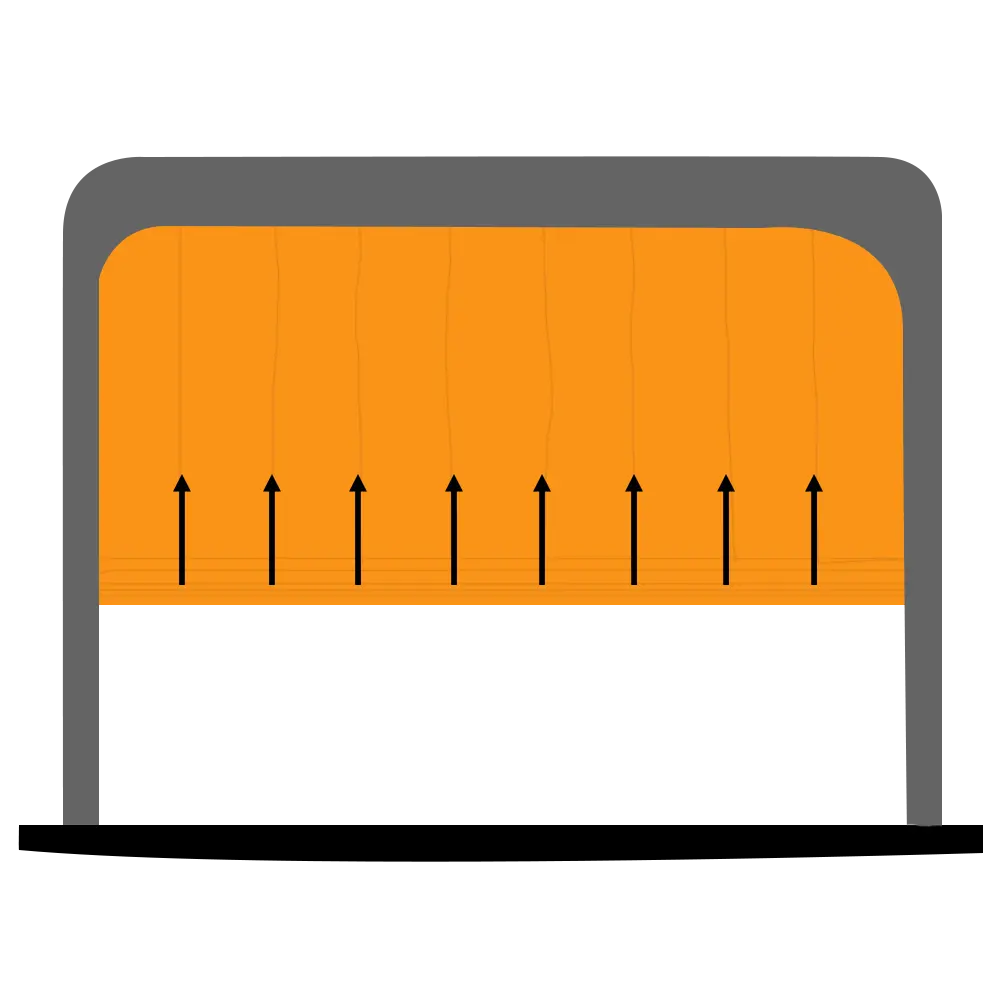
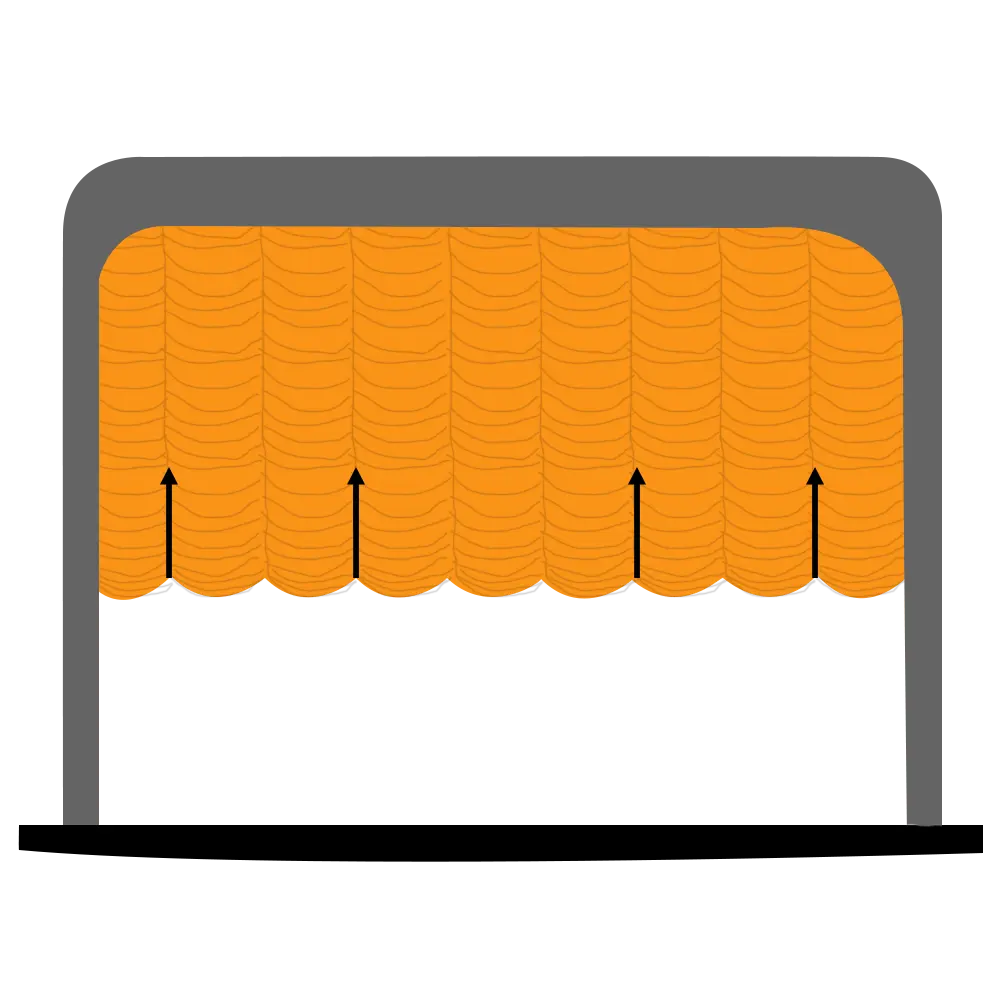
Horizontal lift lines pulling flat pleats upward.
A Roman uses horizontal lift lines stitched across the back of the drape to fold the fabric into neat flat pleats as it rises. It reads cleaner and less ornate than an Austrian, which suits multi-use stages, contemporary dance, and small-scale theatres that still want a lifting reveal. Less fullness than the Austrian means lighter rigging demand.
Practical note
Works well in wool serge or medium-weight velour. Suits venues that want the lift-style reveal without committing to the Austrian's fabric volume.
Compare drape fabrics for Roman builds in the velvet vs wool vs molton comparator.
Kabuki drop curtain
Rigged hold-and-release for an instant drop.
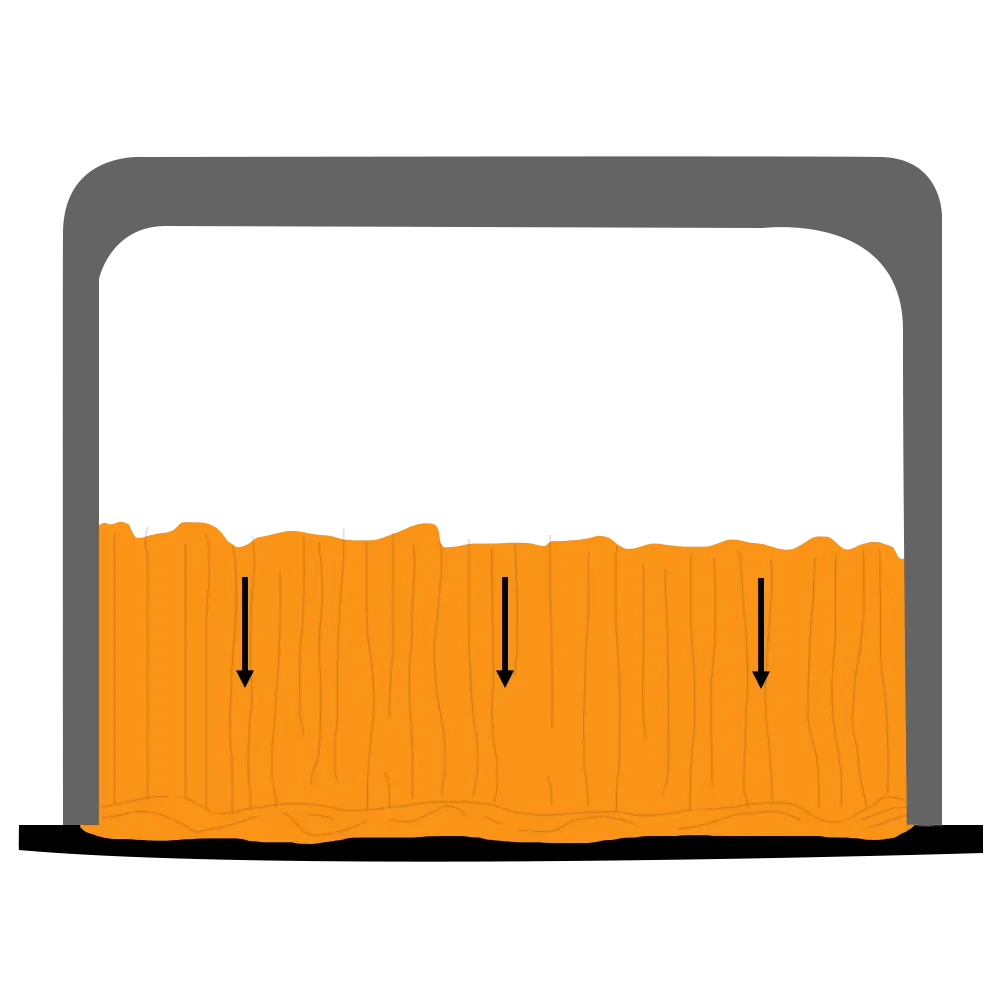
A kabuki holds the drape in place via an electromagnetic or pin-release rigging system, then drops the entire curtain to the deck on cue in a fraction of a second. Festivals, large concert reveals, and product launches use it for the shock-cut moment that no other style can produce. The drape itself is straightforward; the rigging is the engineered component.
Practical note
Requires rigging infrastructure: release units, control line, and a safe drop zone clear of crew and cabling. Sits squarely in the TSA Rigging silo, not drapes alone.
Kabuki rigging is engineered as a system - factor it into your Venue Systems Health Check when planning the install.
Tumbler curtain
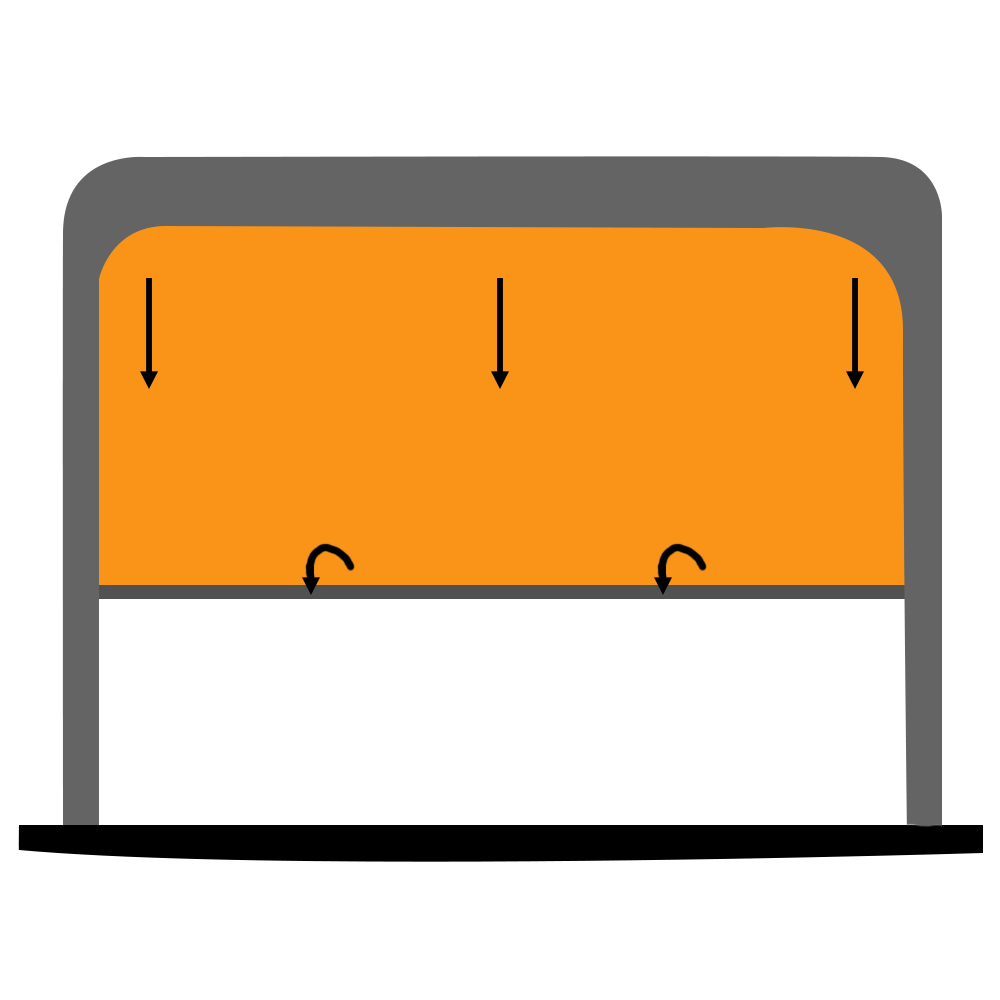
Sequential panel folds cascading down the proscenium.
A tumbler is built from independent vertical panels that release in sequence, cascading down across the proscenium rather than dropping as one mass. Fashion shows, awards ceremonies, and automated touring productions specify it for the choreographed cue rather than the brute reveal. Each panel runs on its own release mechanism.
Practical note
Needs an automation layer to time the sequence reliably. Talk to TSA Rigging early - this is a system spec, not a drape order.
Tumbler installs hinge on rigging and automation engineering - start with the Venue Systems Health Check.
Four questions decide which one fits.
The eight styles are not interchangeable, but the choice is not guesswork either. Four questions narrow it down before you talk fabric. Answer them against your room, not the brochure.
What does your fly tower give you?
Guillotine, Austrian and Venetian need vertical clearance roughly twice the drape drop. A traveller does not.
What tracks do you already have?
Corded and motorised tracks run travellers. Lift-style curtains need line sets or motorised hoists.
What does your crew turn over each week?
Motorised solutions pay back fast in high-turnover venues. Manual systems are fine for stable repertory.
What work do you actually programme?
Classical and gala favour tableau, Austrian and Venetian. Concert and corporate favour guillotine, kabuki and tumbler. Schools and multipurpose favour the traveller.
Match the style to the venue, not the other way around. Not sure which way the answers point? Talk it through with the team before you commit to a spec.
Need advice? Talk to our teamDrape and rigging, specified as one system.
Choosing between opening styles is a rigging decision as much as a drape decision, and that is the bit most suppliers leave to someone else. TSA carries drapes, tracks, line sets, motorised hoists, and the engineering bench to spec them as one system, in-house and Australia wide.
We have got your back from fabric selection through to the rigged release on opening night, with the certificates, drawings, and aftercare to back it up. If you are specifying for a new build or refurbishment, talk to us against your venue's fly system, track length, and production calendar - not a generic catalogue.
Start with the TSA drapes range, or book a Venue Systems Health Check to assess what is already hanging in your venue.
Reveal Productions, the drape manufacturing arm of the TSA group, covers the same eight styles from the workshop side.
We've got your stage. You've got your show.
Specifying drapes for a new build or refurbishment?

Free download
Get the drapes catalogue.
Every fabric, weight, track and FR rating in one PDF - emailed straight to you.
Stage drapes, tracks & rigging.
Wool serge, velvet, PolyCyc, blockout - with the tracks and line sets to move them.
Browse drapes at TSA