





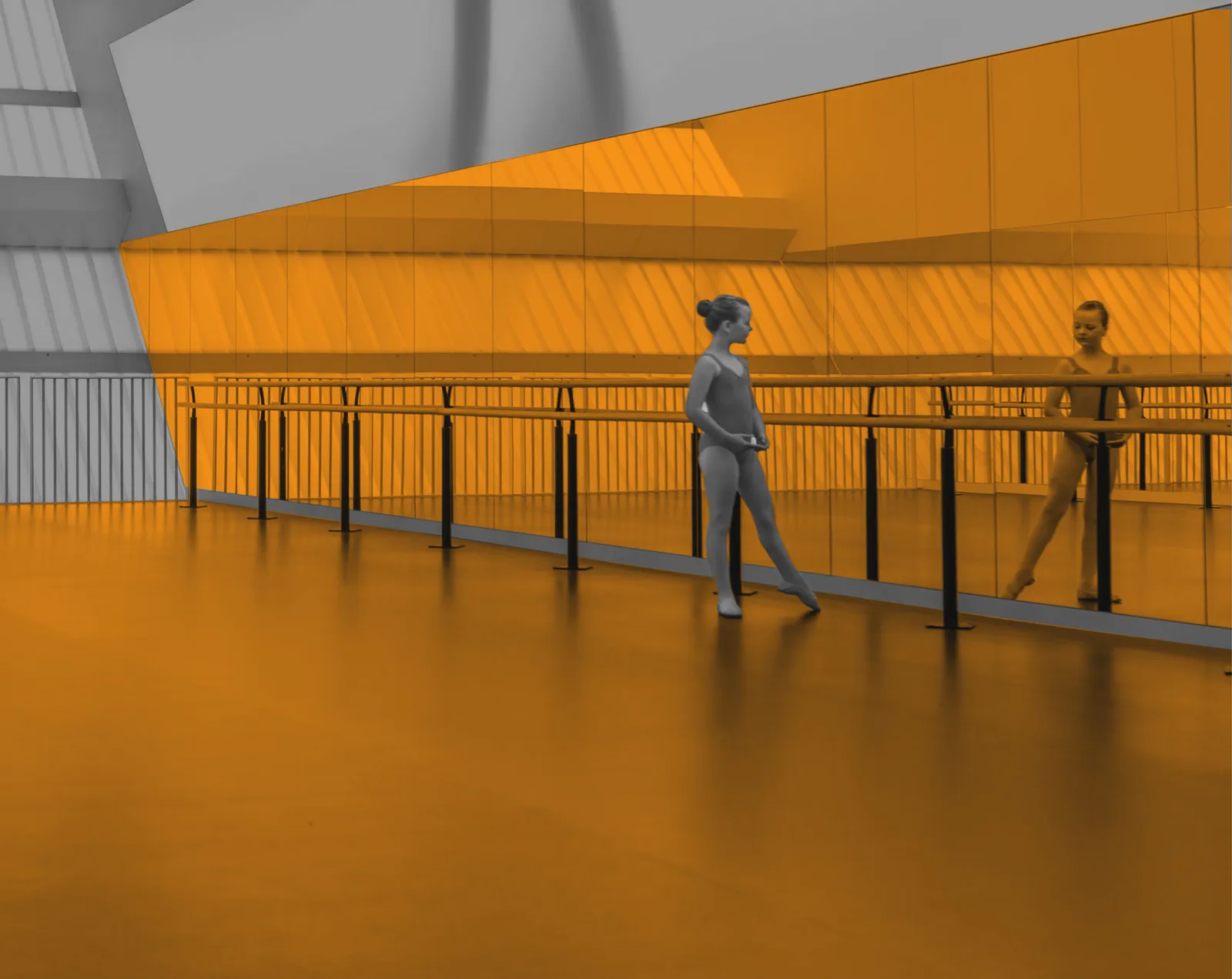


Why does one hall swallow sound and another ring? A lot of it is soft goods - or the lack of them.
Article · Drapes & Sound
Updated 5 Jun 2026
Drapes
Acoustics
Stage drapes and the sound in your room.
A room that rings, a hall that swallows speech - a lot of it comes down to soft goods. Here is how drapes absorb sound, the three levers that decide how much, and where they stop.
Soft fabric absorbs sound instead of bouncing it. Less reflection means less reverberation, and clearer speech and music.
How much a drape absorbs comes down to three things: how heavy the fabric, how full the pleat, and how far it sits off the wall.
The right fabric, fullness and spacing, and the drapes earn their keep twice: masking and acoustics.
A heavy, full drape hung off the wall is one of the most honest pieces of acoustic treatment there is.
Absorption vs reflection.
Hard surfaces reflect sound. Those reflections pile up as reverberation - the wash that blurs speech and muddies music in a bare, hard room. Soft, porous fabric does the opposite: it absorbs sound energy rather than bouncing it, mostly across the mid and high range.
That is the whole idea behind soft goods as an acoustic tool. Cover enough reflective surface with the right fabric and the room settles - shorter reverberation, clearer speech, tighter music. One honest caveat: drapes are mid and high absorbers, not bass traps. Deep low end needs a wider acoustic fix.
The three levers that decide how much.
Not all drapes absorb the same. Three things move the dial - and you can pull all three.
Weight is the lever you buy, so it pays to check the number before you spec. Per-fabric weights and widths are listed on the Reveal Productions fabric library.
Weight
Denser, heavier fabric absorbs more sound. Wool serge and velour do real acoustic work; a light molton does less.
Lever
Choose a heavier fabric for the masking that does double duty.
Fullness
A fuller pleat has more surface and traps more air, so the same fabric absorbs more than it would hung flat.
Lever
Add fullness where you want the drape to work acoustically.
Air gap
Hanging the drape off the wall, even by 100mm, lifts absorption in the lower-mid range a flat-mounted drape misses.
Lever
Gain a gap behind the drape wherever the rig allows.
The cheapest upgrade is distance.
A drape pressed flat against a wall absorbs the highs, but not much underneath them. Give the same fabric an air gap behind it and it reaches lower in frequency - the gap lets the fabric work against the slower-moving, lower-mid energy a flat-mounted drape passes straight through.
You do not need much. Even a hundred millimetres off the wall makes a measurable difference, and it costs nothing but the bracket. It is the most honest acoustic upgrade there is.
What it means for your masking.
The fabric you mask with is already doing acoustic work, for better or worse. Here is how the common ones behave.
- Wool serge and velour - heavy and dense, the workhorses for absorption as well as masking.
- Turo molton - lighter, so it absorbs less, but it is easier to handle and lighter on the rig.
- Flat scrim and sharkstooth - open or flat, so they reflect or pass sound; chosen for look, not for absorption.
- A fuller pleat - more absorption from the same cloth, wherever you add it.
- More drape area - shorter reverberation. Drapes tame the mid and high; deep bass still needs a wider acoustic fix.
So before you treat a room, look at what is already hanging in it - the masking you have may be helping, or it may be the wrong fabric in the wrong place.
Five questions before you reach for soft goods.
Soft goods fix a lot, but not everything. These five tell you what they can do for your room.
What are you fixing?
Echo, reverberation, or just masking?
Which surfaces reflect?
Treat the hard, parallel ones first.
How heavy can you hang?
Weight drives absorption and the rig.
Can you gain an air gap?
Spacing off the wall lifts the lower-mid.
Soft goods, or a wider job?
Know when to bring in an acoustician.
When drapes won't fix it.
Soft goods are a real acoustic tool, but they are not the whole toolbox. The honest part of the job is knowing where they stop.
- Deep bass - drapes absorb the mid and high. A boomy low end needs bass traps or panels tuned to the frequency, not more fabric.
- Room acoustics, not building acoustics - drapes calm the sound inside a room. They do not stop noise coming through a wall, floor or ceiling from next door.
- Flanking and gaps - sound finds the way around a drape that does not seal at the edges, the floor or the top.
- A room that needs design, not dressing - past a point the fix is a measured acoustic design, with the soft goods as one part of it.
If the problem is bigger than reverberation, we will say so - and point you to the right fix rather than sell you more drape.
We've got the room. You make the sound.
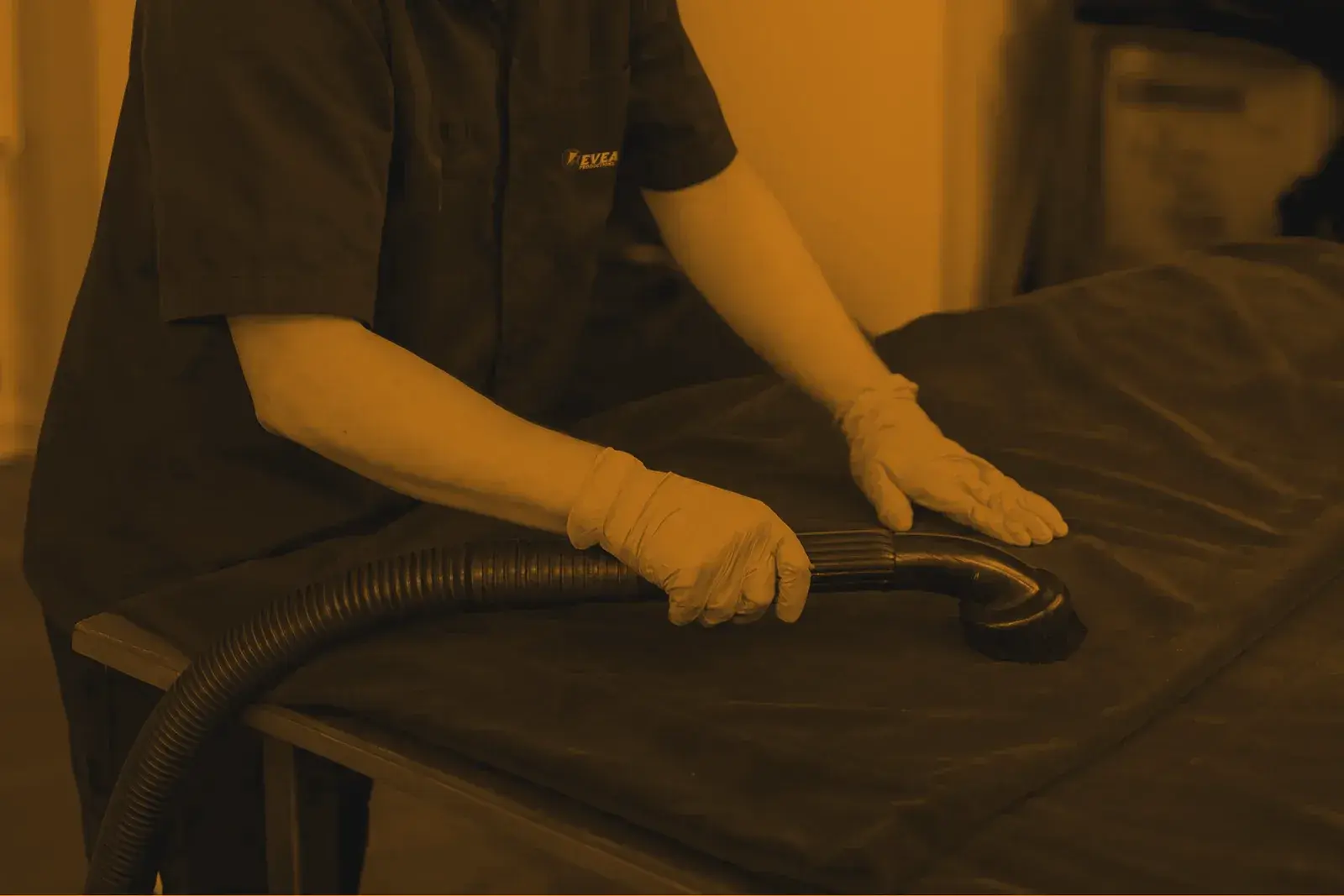
Our heavy IFR wool serge and velour are made to the fullness the room needs, hung on track and rig we install - so the same drape masks the stage and absorbs the sound.
Not sure what fabric or fullness suits the job? The Drape Selector walks it with you and gives you a weight to plan around.
And a Venue Systems Health Check looks at what is already hanging and what the room is doing with it. We will also tell you, plainly, where soft goods stop and a full acoustic design starts.
We've got the room. You make the sound.
Got a room that rings?
Free download
Get the drapes catalogue.
Every fabric and weight - including the heavy absorbers - in one PDF, emailed straight to you.
Heavy masking & soft goods.
Wool serge, velour and molton - the fabrics that mask a stage and settle a room, made to measure.
Browse drapes at TSA