


Which truss type, and how do you rig it so the span carries the load it needs to?
Rigging · Explainer
Updated 22 Jun 2026
Rigging
Truss
Stage truss, explained. Types, terms and how it's rigged.
Flat, tri or box - the chord count sets the load. A plain-language guide to the truss types, the terms on the spec sheet, and the rigging method that keeps a span safe.
Flat (2), tri (3), box (4), 5-chord. More chords, more load and stiffness over a span.
Pick up at node points, sling in compression not tension, and use the lower chords where you can.
Deflection rises with span, load and uneven distribution. Check the load table before you load it.
A truss does not fail because it is weak. It fails because someone loaded a span the load table never promised.
Named by the chords. Counted on the spec sheet.
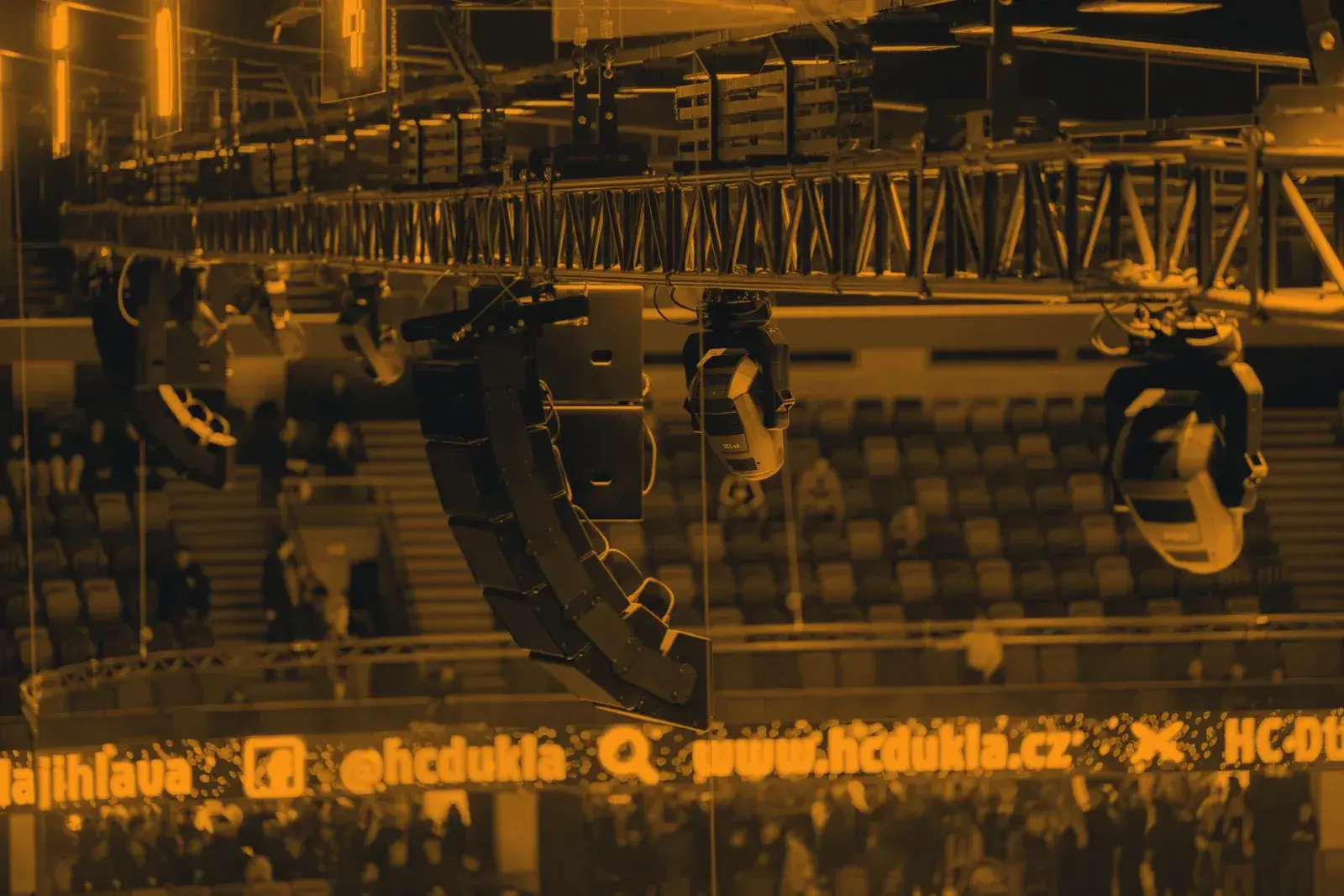
The first thing to read on a truss is its chord count - the number of main load-bearing rails running its length. Flat truss has two, triangular has three, and box truss has four. A fifth chord turns a box into a 5-chord truss for the longest spans. More chords generally means more load capacity and more stiffness over a given span.
This is an answer-first primer for venue and production crew, not a substitute for the manufacturer's load tables. The cards below are the headline types; the table compares them. When you are ready to spec a real span, our truss and structures range carries the load tables for each section.
Flat / ladder
Two parallel chords joined by webbing - the lightest, lowest-profile truss. Run flat or on edge for lighter spans, ground-support ladders and decorative lines.
Chords
2 (a single plane of bracing).
Best for
Lighter spans, ground support, decorative and low-profile runs.
Watch
Less load and stiffness over a long span than tri or box.
Triangular
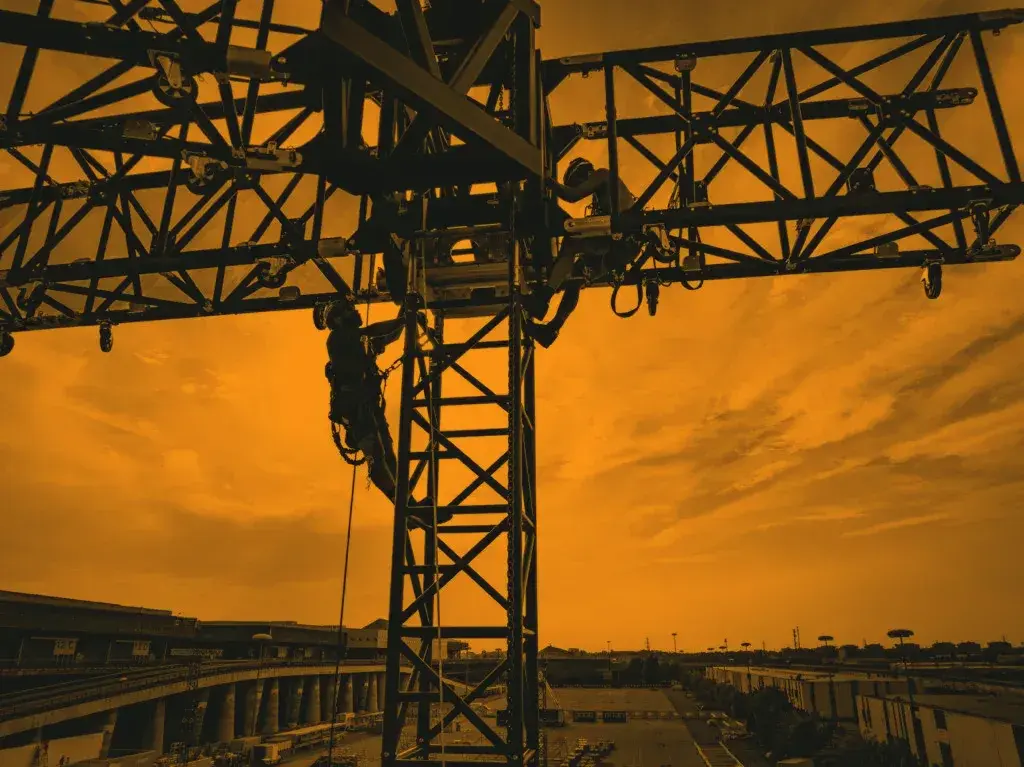
Three chords in a triangle - more rigid and load-bearing than flat, and lighter than box. A common all-rounder for lighting and mid-weight scenic spans.
Chords
3 (triangular cross-section).
Best for
Lighting bars, mid spans, towers and general rigging.
Watch
Orientation matters - keep the webbing oriented as the maker specifies.
Box & 5-chord
Four chords in a square or rectangular section - the workhorse for long spans and heavy loads. A fifth chord adds capacity for the longest runs and centre-hung loads.
Chords
4 (5 for long-span and centre-hung).
Best for
Long spans, heavy AV and scenic loads, LED walls, performer flying.
Watch
Heaviest to fly - size the hoists and pickups to the loaded weight.
| Property | Flat / ladder | Triangular | Box / 5-chord |
|---|---|---|---|
| Chords | 2 | 3 | 4 (5 for long spans) |
| Cross-section | Ladder (single plane) | Triangle | Square / rectangle |
| Relative load over a span | Lower | Medium | Highest |
| Relative stiffness | Lower | Medium | Highest |
| Typical use | Decorative, ground-support, light spans | Lighting bars, mid spans, towers | Long spans, heavy AV/scenic, LED walls, flying |
| Connection | End plate or coupler | End plate or coupler | End plate or coupler |
| Before you load it | Check the load table for the span | Check the load table for the span | Check the load table for the span |
Start with the span and the load.
A truss is specified by what it has to carry, over what distance, supported where. Those three numbers - load, span and support points - set the section you need. The chord count is the shorthand; the load table is the proof. Read the table for the span you actually have, not the one you wish you had.
As a rough orientation, a common 29 cm box truss carries on the order of 800 kg uniformly distributed over a 3 m span, with usable spans out past 12 m at reduced load. Heavy-duty box sections push well beyond that. These are orientation figures only - the published table for the exact section and span is what governs.
TSA stocks the full LITEC X and H Series end-plated range with load tables per section, plus powder coating to match a venue rig and pre-configured kits. We ship Australia wide.
Rig in compression. Pick up at the nodes.
Good rigging keeps the load in the part of the truss built to take it. A few habits hold across nearly every job:
- Pick up at node points. A node is where the webbing meets a chord. Rig there and the load feeds into the bracing, not into the middle of an unsupported chord.
- Use the lower chords as connection points. Where the design allows, connect to the lower chords so the truss works the way the load table assumes.
- Sling in compression, not tension. A truss is built to be held up, not pulled apart. Keep pickups in a compression configuration rather than hanging the structure in tension.
- Follow the maker's spanning distances. Every section has a recommended maximum span between supports. End-plated truss removes some orientation worry, but the spanning limit still governs.
- Keep the webbing oriented correctly. On a section that has an up and a down, build it the way the manufacturer specifies - not whichever way it came off the truck.
One rule sits over all of them: connect truss the way the manufacturer says to, and never mix sections or hardware across systems. Spigots, coupler pins and R clips are matched to their range. Mixing them is how a rated connection quietly stops being rated.
If the span, the load or the pickup geometry sits outside the published table, that is an engineering question, not a guess. Our rigging team will work the numbers and document the result.
Deflection is the number that bites.
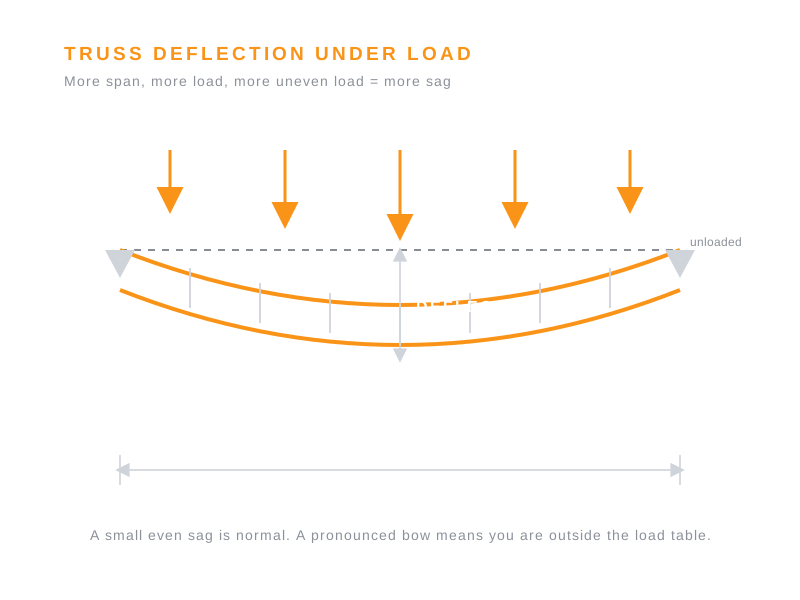
Deflection is how much a truss bends under load. Every loaded span sags a little - that is normal, and the load table allows for it. What is not normal is a span that bows because it was loaded past what its table promised.
Four things drive it: span (longer bends more), load (more weight bends more), distribution (a point load in the centre bends more than the same weight spread out), and the strength of the section (more chords, stiffer truss). Change any one and the sag changes with it.
The practical rule: a small, even sag is fine; a truss that reads like a smile is not. If a span looks like it is bowing, stop and check it against the load table before anyone works under it. The table is the promise - deflection is the truss telling you whether you kept it.
The words on the spec sheet.
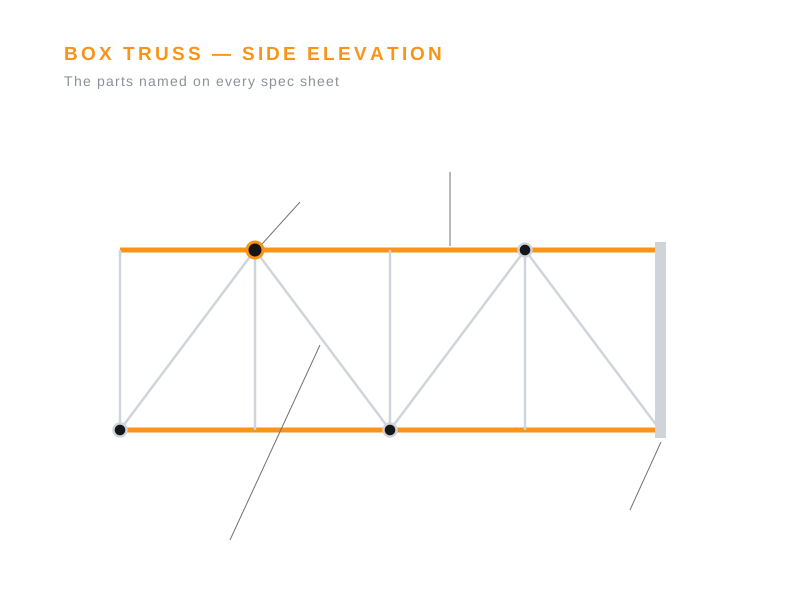
Chord - a main load-bearing rail running the length of the truss. The chord count names the type. Webbing (or bracing) - the diagonal members between the chords that turn separate rails into one stiff structure. Node - where webbing meets a chord, and the right place to rig a pickup.
End plate / end cap - the connecting face on end-plated truss, joined with a spigot or coupler, a coupler pin and an R clip. Baseplate - the ground support a tower or stand bolts to. Get these five words straight and most spec sheets read cleanly.
TSA stocks, powder-coats and kits the full LITEC range, and our rigging team will spec a span against your actual load. We've got the engineering. You've got the show.
Spec'ing a truss for a real span and load?
Talk to the team
Sizing the hoists?
Talk to our team about your span.
Send us the load, the span and where it is supported. We'll spec the section off the load table, powder-coat it to your rig if you want, and document the result. Australia wide.
Start a conversationTry the Hoist Selector.
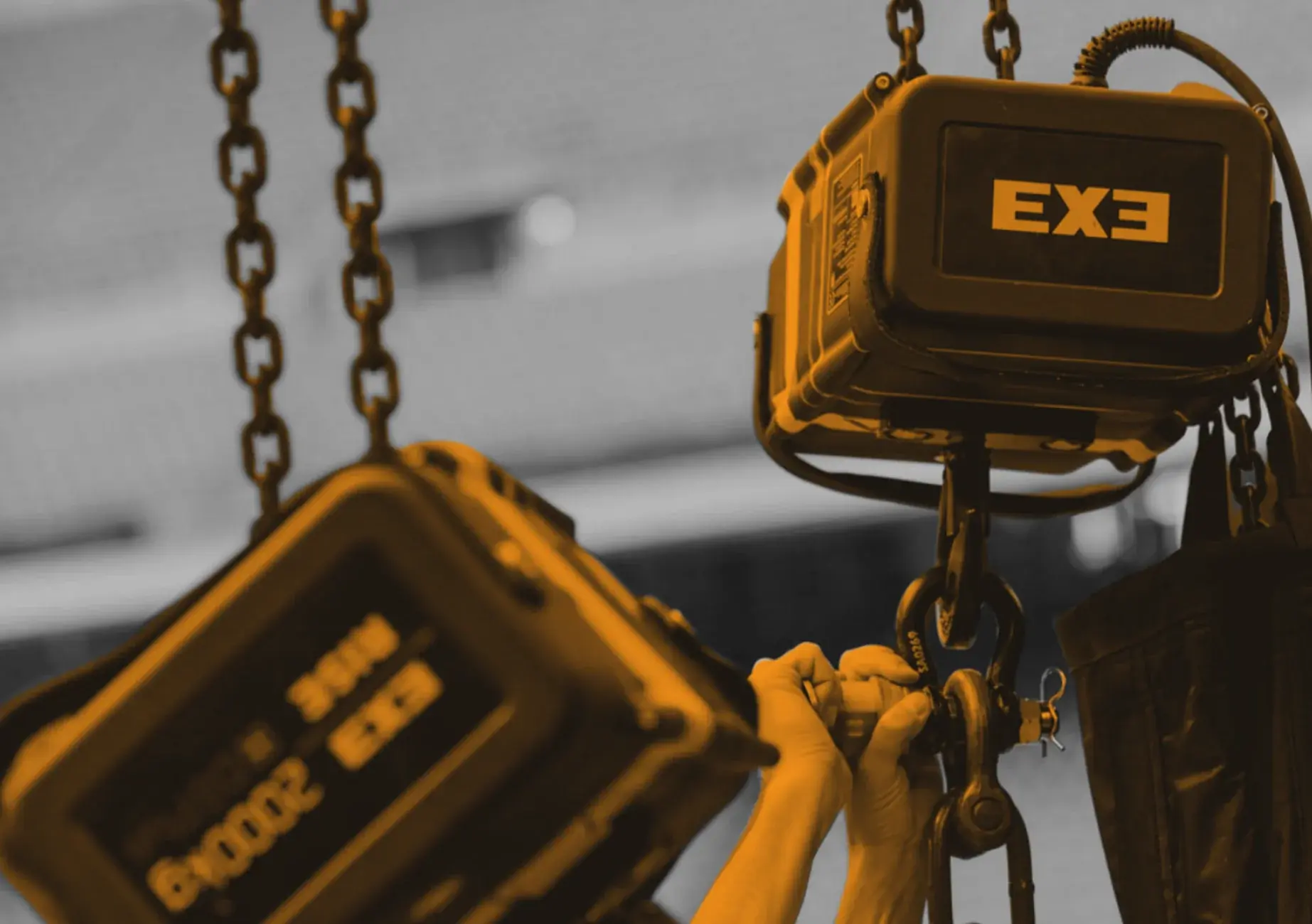
Flying the truss means sizing the hoists to the loaded weight. Our selector narrows it down in a few clicks.
Open the Hoist Selector